
Scam alert · September 23, 2026
The Bill Stopped Coming. Then the Money Started Leaving.
A recent elder-fraud case shows why missing financial mail can be an early identity-theft warning. Learn the simple account checks families can put in place now.
Read this in five minutes. Then talk about it with someone you care about.
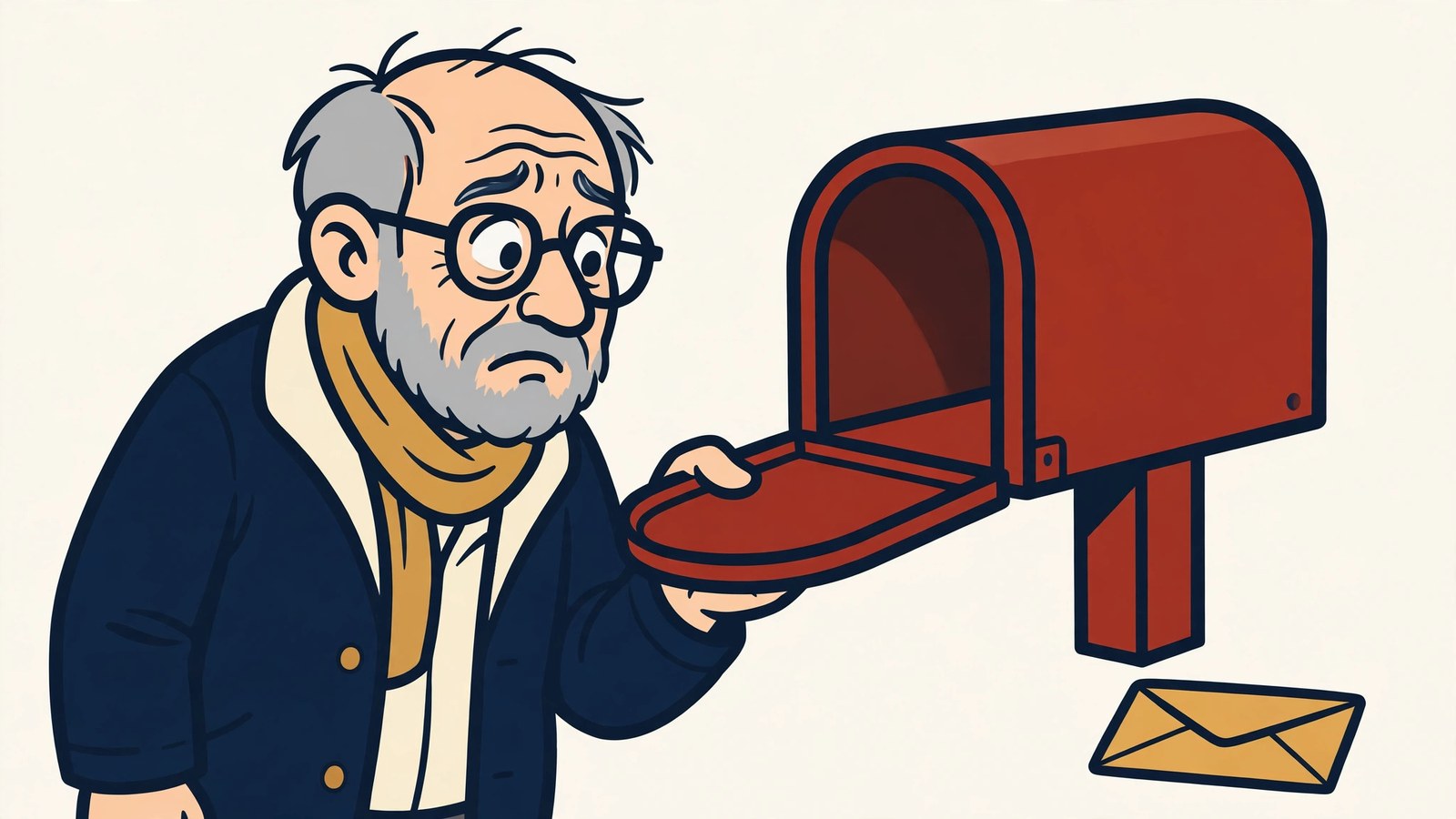
Most of us would welcome one less bank statement in the mailbox. But a bill or statement that suddenly stops arriving can be more than a delivery problem.
It can be a warning.
Federal prosecutors in Maryland recently charged a man with bank fraud in an alleged scheme that targeted more than 40 people, primarily older adults whose average age was 81. According to the criminal complaint described by the Justice Department, the suspect obtained customers' personal information, changed the mailing addresses on their financial accounts, ordered debit cards in their names, and used the cards for purchases and ATM withdrawals.
Prosecutors allege that more than 1,500 fraudulent ATM withdrawals produced over $1 million. The charge is an allegation, and the defendant is presumed innocent unless proven guilty.
For families, the case carries a practical lesson: identity theft does not always announce itself with a suspicious phone call. Sometimes the first clue is something ordinary that never arrives.
How the scheme hides itself
Paper statements and replacement cards can alert an account holder to changes. Redirect the mail, and those warnings may go somewhere else.
An identity thief who has enough personal information may try to change contact details, request a new debit card, or gain control over an existing account. The account itself still looks familiar to the victim. The bank is real. The card is real. The withdrawals are real. What changed is who receives the mail and who controls the card.
That makes the scheme different from a typical impersonation call. No stranger has to persuade the victim to send money. The criminal tries to operate quietly inside an account that already exists.
Why older adults may miss the warning
Many older adults manage several financial, insurance, medical, and retirement accounts. Some statements arrive monthly, others quarterly, and some have already moved online. A missing envelope can feel insignificant.
Families may also hesitate to ask about finances because they want to respect independence. That instinct is understandable. Protection does not require taking control away. It can begin with agreeing on a few warning signs that the account holder wants help investigating.
The conversation should sound like teamwork, not surveillance.
Warning signs to notice
The Federal Trade Commission says a bill that stops arriving could mean someone changed the billing address and may be misusing the account.
Other signs include a replacement card that was expected but never arrived, an unexpected notice about changed contact information, withdrawals or purchases the account holder does not recognize, password-reset messages they did not request, or difficulty signing into an account with a password that previously worked.
Unexpected mail can matter too. Watch for bills for accounts that were never opened or letters about address changes, loans, credit cards, or services nobody in the household requested.
One warning sign may be an error. Several together deserve immediate attention.
The 60-second defense
Make a short list of the household's important recurring statements: bank, credit card, investment, mortgage, insurance, and benefits. You do not need to share balances. Simply note when each statement normally arrives and whether it comes by mail or electronically.
Turn on account alerts for withdrawals, purchases, password changes, new payees, and updates to contact information when the institution offers them. Send alerts to an email address or phone number the account holder controls.
Review account activity regularly instead of waiting for the paper statement. If a statement stops coming, contact the institution using the number on an existing card or a website you already trust. Do not use contact information from an unexpected message.
Collect physical mail promptly, especially when expecting a check or replacement card. If mail delivery changes without explanation, contact the local post office. The U.S. Postal Inspection Service accepts reports of fraudulent address changes, mail holds, mail theft, and identity theft involving the mail.
If something is wrong
Call the financial institution's fraud department immediately. Ask it to secure the account, review contact-information changes, cancel compromised cards, and investigate unauthorized transactions.
Report identity theft and build a recovery plan at IdentityTheft.gov. Review credit reports through AnnualCreditReport.com for accounts or changes you do not recognize. Depending on what information was exposed, the recovery plan may recommend a fraud alert or credit freeze.
If the U.S. Mail was involved, report it to the Postal Inspection Service at USPIS.gov/report or 1-877-876-2455.
Move quickly, but do not blame the account holder. Quiet theft is designed to remain unnoticed.
Talk about it tonight
Ask: “If one of your regular bank statements stopped arriving, would you notice, and who would you want to help check it?”
Then identify one trusted person who can help make calls without taking over the account.
If an unexpected bank notice, address change, or account message feels suspicious, describe it in The Scam Hotline Scam Detector. Do not include account numbers, passwords, or other sensitive information. The free tool can help identify warning signs and organize the next verification step.
Scammers want silence. Families talk. Talk to yours today.