
Scam alert · October 29, 2026
They Offered Free Housekeeping. The Paperwork Enrolled You in Hospice.
Fraudulent hospice enrollment can begin with offers of free home services. Learn how to protect a Medicare number, review claims, and verify care.
Read this in five minutes. Then talk about it with someone you care about.
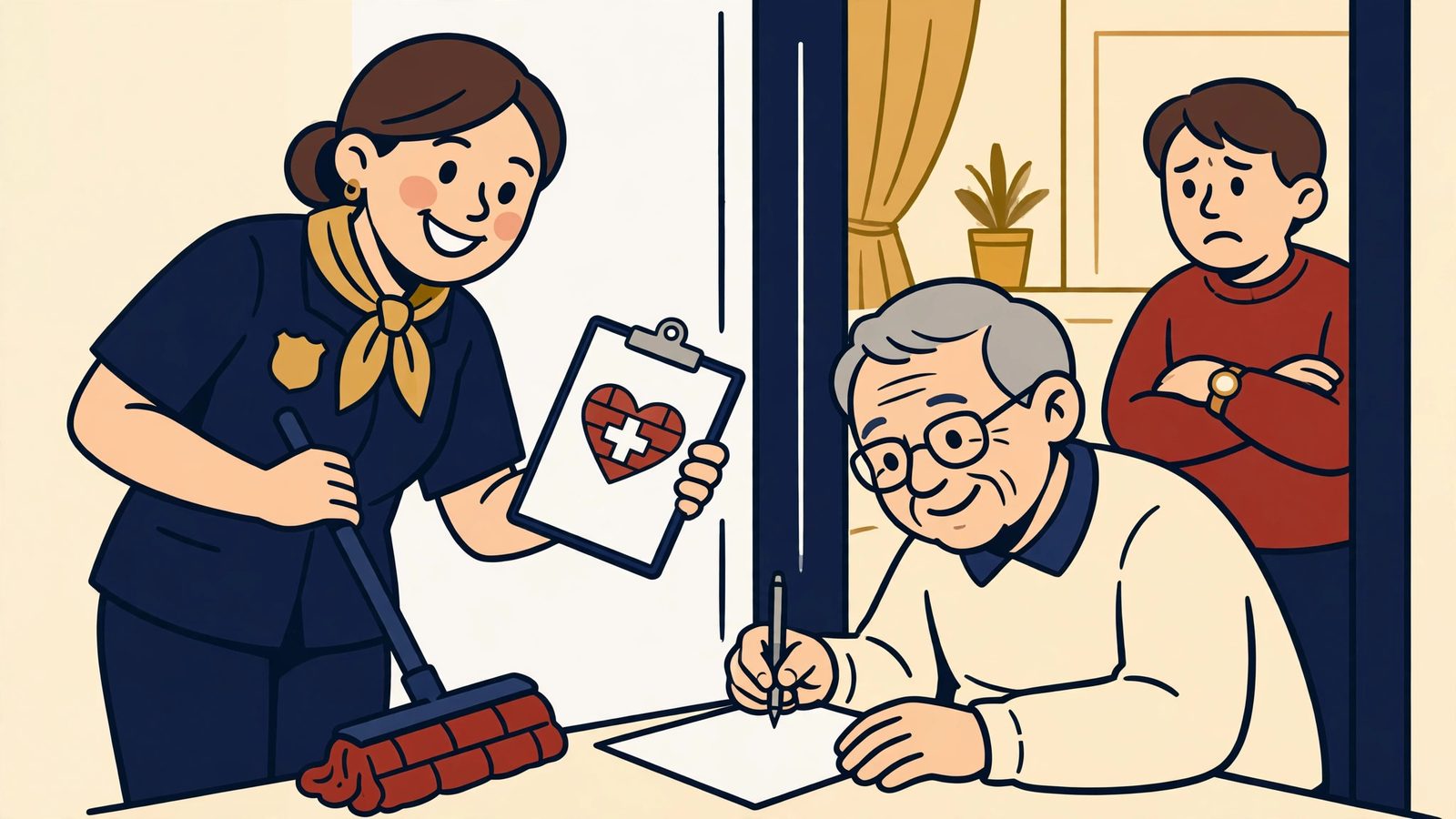
The offer may sound helpful, not suspicious: free housekeeping, free meals, a gift card, or another service for an older adult who could use a little support.
Then comes the paperwork.
According to a 2026 FBI warning, scammers have been enrolling Medicare recipients in hospice care even when they do not need it, sometimes without their knowledge. The fraudster may obtain a Medicare number and signature by presenting hospice enrollment as the condition for receiving a free service. Medicare can then be billed for care the person never received.
This does not mean hospice itself is suspicious. Legitimate hospice care can provide important, compassionate support to people with terminal illnesses and their families. The warning is about fraudulent enrollment: strangers using the language of healthcare to obtain personal information, signatures, and Medicare payments.
Why this works
The approach is effective because it rarely begins with an obvious demand for money.
Instead, it begins with help.
A friendly person at the door or on the phone may sound familiar with Medicare benefits. They may say a program is already available, that the paperwork is routine, or that signing now will unlock services at no cost. For someone managing health concerns, household needs, or confusing insurance documents, the offer can sound both credible and welcome.
The scam also borrows authority from the healthcare system. Forms, medical terminology, and references to Medicare can make the interaction feel official. A person may sign without realizing the document describes hospice care or authorizes billing.
Warning signs to watch for
Pause when someone:
- Arrives uninvited or calls unexpectedly about hospice services.
- Offers housekeeping, meals, cash, gift cards, or other rewards in exchange for enrollment.
- Asks for a Medicare card, Medicare number, insurance information, or signature before a conversation with the person's doctor.
- Pressures someone to sign immediately or discourages them from calling a family member.
- Provides blank, incomplete, or confusing forms.
- Claims Medicare provides free housekeeping simply because someone enrolls in hospice.
- Appears on a Medicare Summary Notice even though the family does not recognize the hospice provider or service.
Medicare states that hospice eligibility must be certified by doctors and is intended for a person with a terminal illness whose life expectancy is six months or less if the illness follows its normal course. That is a medical decision and a serious family conversation, not a door-to-door promotion.
The 60-second defense
Create one family rule:
No one shares a Medicare number or signs healthcare paperwork in response to an unsolicited offer.
If someone presents an offer, stop the conversation and take these steps:
- Do not show or photograph the Medicare card.
- Do not sign anything, even if the representative says it is only a consent or eligibility form.
- Call the person's regular doctor using a number you already trust.
- Verify any provider independently through Medicare, not through a phone number or link supplied by the visitor.
- Review Medicare claims and Medicare Summary Notices for unfamiliar providers or services.
Families can also create a secure Medicare.gov account to monitor claims. Make this a shared routine, with the Medicare recipient's permission, rather than waiting for a suspicious charge to appear.
What to do if it may have already happened
Do not blame the person who signed. The interaction was designed to look helpful and legitimate.
Collect the paperwork, names, phone numbers, messages, and dates. Contact the person's doctor and call Medicare at 1-800-MEDICARE (1-800-633-4227) to ask about the enrollment or unfamiliar claims. Potential internet-enabled fraud can also be reported to the FBI's Internet Crime Complaint Center at IC3.gov.
Acting quickly matters, but calm matters too. A clear conversation will usually produce more useful information than anger or embarrassment.
Talk about it tonight
Ask your family:
“Who would we call if someone offered Mom or Dad free home services in exchange for a Medicare number or signature?”
Choose the person and save their number now. The goal is not to memorize every healthcare scam. It is to make pausing and verifying the automatic response.
Scammers want the decision to happen privately and quickly. Families can make it slower, shared, and much harder to manipulate.
If your family receives a suspicious message or offer, you can describe it to the free Scam Detector for help identifying warning signs and deciding what to verify next. Remove Medicare numbers, medical records, and other sensitive information before submitting anything.