
Scam alert · October 19, 2026
The Repairman Found an Urgent Problem. Do Not Let the Emergency Start at Your Door.
Home-service scams use low prices, surprise problems, and rushed contracts. Learn the family rule that protects your home before work or payment begins.
Read this in five minutes. Then talk about it with someone you care about.
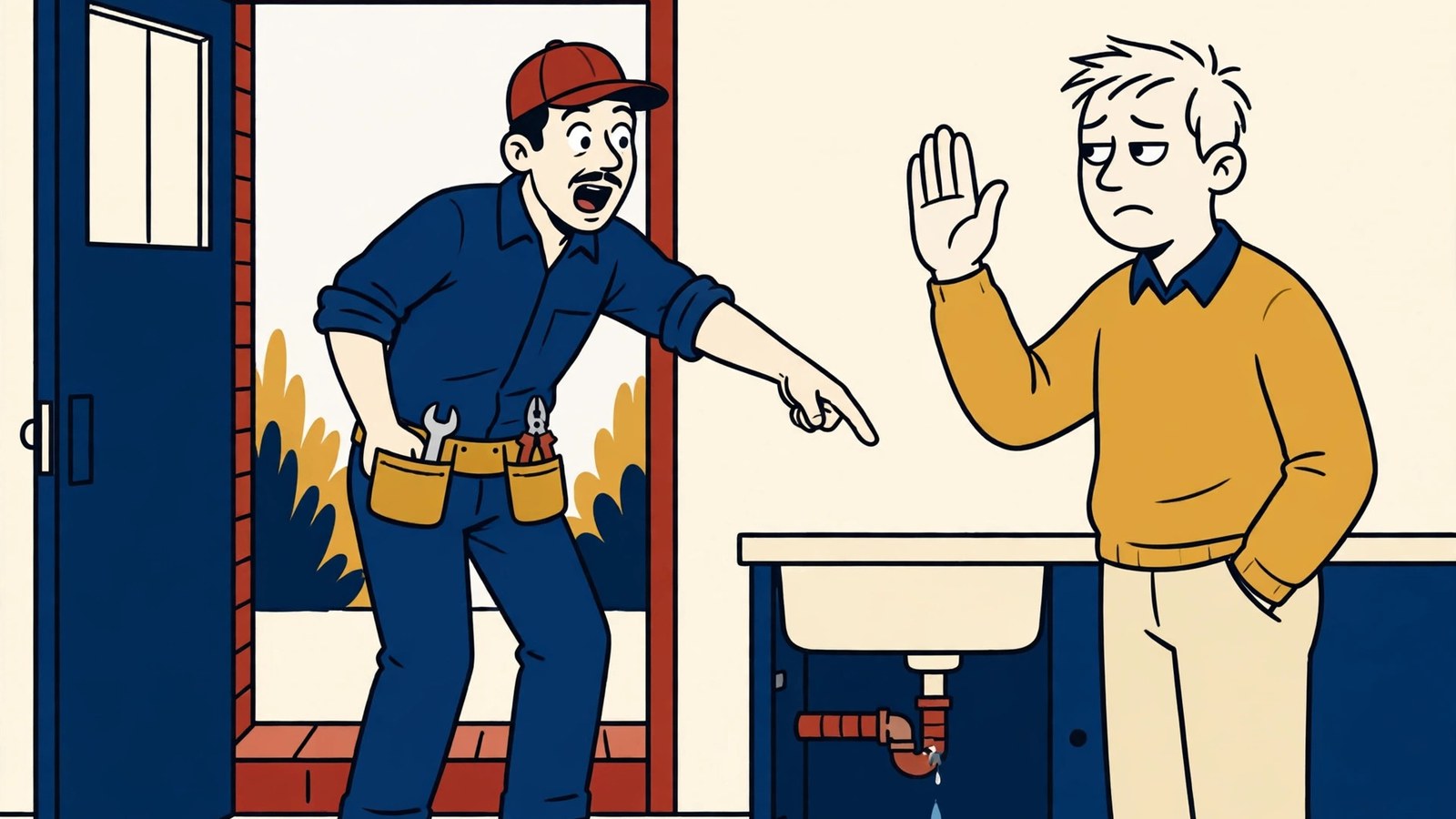
The offer may sound practical: a low-cost furnace inspection, discounted air-duct cleaning, driveway repair, roofing work, or a new home appliance.
Then the person at your door discovers something urgent.
Your wiring is dangerous. Your roof may leak. Your furnace could fail. The price is only available today, and the paperwork needs to be signed now.
The Canadian Anti-Fraud Centre says it is seeing increased reports involving misleading home services and equipment. People may be reached through social-media ads, telemarketing calls, or door-to-door sales. Offers can involve furnaces, water heaters, paving, duct cleaning, general maintenance, or other equipment and services.
Some offers lead to poor-quality work, invalid warranties, unsafe repairs, inflated prices, or contracts that are much more expensive than the customer understood.
The right response is not to become suspicious of every contractor. It is to make sure no stranger gets to create an emergency inside your home and then sell you the only solution.
Why this works
A home is emotional. It is where your family sleeps, where memories live, and often where much of your savings is invested.
When someone says the home is unsafe, the fear feels responsible rather than impulsive. Paying quickly can seem like protecting the family.
The pitch may include several pressure points:
- “We are already working in your neighborhood.”
- “We have materials left from another job.”
- “This could become dangerous if you wait.”
- “The discount ends today.”
- “We can arrange financing for you.”
- “You need to sign so we can begin immediately.”
None of these statements proves fraud. But each one tries to reduce the time available to compare prices, verify a license, read a contract, or call someone you trust.
The family rule
Use one rule for any unexpected home-service offer:
No work starts, no contract is signed, and no money is paid during the first visit.
If the problem is real, it will still exist after you get another opinion. A reputable contractor should be willing to provide written information and let you review it.
If there is an immediate safety concern, leave the area if necessary and call the appropriate utility, emergency service, insurer, or a contractor you independently select. Do not rely only on the person who appeared unexpectedly and diagnosed the danger.
The 60-second defense
Before anyone begins work:
- Pause the visit. Say, “I do not authorize work or payment today.”
- Do not let an unsolicited seller inspect other areas of the home. Keep the interaction outside when possible.
- Get the offer in writing. It should describe the work, materials, price, schedule, business name, and contact information.
- Verify the company independently. Check licensing and insurance through your state, province, county, or local authority.
- Get multiple written estimates. The Federal Trade Commission recommends comparing contractors rather than automatically choosing the lowest price.
- Call someone you trust. A family member or neighbor can bring useful distance to an urgent decision.
Do not pay the full project price in advance. Avoid cash or wire transfers, and do not sign blank or incomplete documents. Be especially careful when the contractor offers financing through a lender they selected. Read every document and understand whether the agreement uses your home as security.
Rules and cancellation rights vary by location. In the United States, the FTC notes that certain contracts signed in a home or away from a seller's permanent place of business may include a three-business-day cancellation right. Check the specific law where you live rather than relying on the salesperson's explanation.
If work or payment already happened
Do not let embarrassment delay action.
Save the advertisement, contract, estimate, receipts, photographs, license-plate information, and all messages. Contact the company in writing and keep copies. If you paid by credit card, contact the card issuer promptly and ask what dispute options may apply.
Report suspected fraud to local police and the appropriate consumer-protection authority. In Canada, report to the Canadian Anti-Fraud Centre. In the United States, report to the FTC and your state attorney general. If financing or a lien may be involved, consider obtaining qualified legal advice quickly.
Talk about it tonight
Ask your family: “What is our rule if someone knocks on the door and says the house needs an urgent repair?”
Put the answer near the front door or save it in a phone: no same-day work, contract, or payment. Then choose one trusted person everyone can call before agreeing to a major home expense.
Scammers often want the homeowner alone with the decision. A family rule puts another voice in the room before fear becomes a signature.
If an offer arrives by text, email, or social-media message, use The Scam Hotline Scam Detector to examine its pressure tactics. Remove names, addresses, contract numbers, financial details, and other sensitive information before using any online tool.