
Scam alert · September 19, 2026
The Driver at the Door May Not Know They're Carrying Scam Money
A recent federal case shows how grandparent scammers used an emergency story and an unwitting rideshare driver to collect cash. Here is the family rule that interrupts it.
Read this in five minutes. Then talk about it with someone you care about.
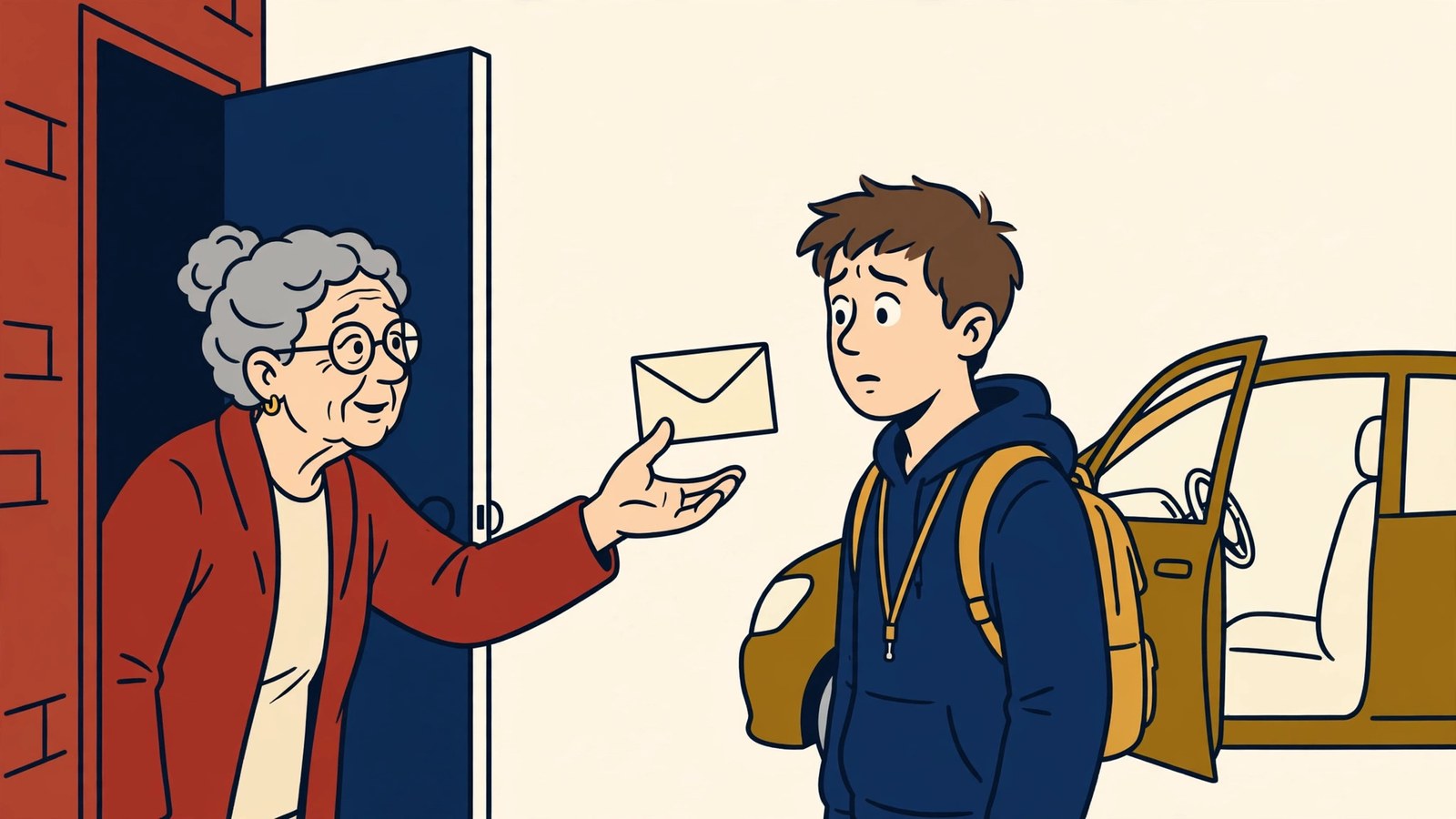
The caller says your daughter or grandson is in jail. The situation is serious, the details are embarrassing, and the money has to be ready now.
Then a driver arrives at your home to collect an envelope of cash.
That final step may feel like proof that the emergency is real. It is not.
A September 17 federal case in Pennsylvania describes a sophisticated grandparent fraud operation in which scammers impersonated close relatives in crisis and arranged for rideshare drivers to pick up cash from older victims. According to the U.S. Department of Justice, the drivers could be unwitting participants who believed they were completing an ordinary delivery.
In one incident described by prosecutors, a Pennsylvania resident handed $10,000 to a driver. The scammer then demanded another $12,000, supposedly to get the victim's daughter released from jail. The victim's family learned what was happening and contacted police before the second collection was completed.
The lesson is important: the person at the door does not have to look like a criminal for the transaction to be a scam.
How this version works
The first caller creates the emergency. They may claim to be a grandchild, child, attorney, bail bondsman, or law-enforcement official. The story changes, but the structure stays familiar: someone you love is in trouble, the matter is urgent, and discussing it with anyone else could make things worse.
Once fear takes over, the caller gives payment instructions. Instead of asking for a gift card or wire transfer, the scammer may arrange for someone to collect cash. A rideshare driver receives a pickup and delivery request without knowing what is inside the package or why it is being sent.
The driver arrives in a familiar vehicle, checks an address, and takes the envelope. That normal-looking interaction can make the caller's story seem official.
But the driver is not confirming the emergency. The driver is only following instructions received through an app.
Why it works
This scam combines love, fear, secrecy, and speed. A parent or grandparent is not carefully evaluating a financial transaction. They are trying to rescue someone they love.
The scammers also build layers into the story. One person may sound like the relative. Another may pose as a lawyer. A third person physically appears to collect the money. Each new person seems to confirm the last one, even though every step is controlled by the same criminal operation.
The request for secrecy is especially powerful. A caller might say the relative is ashamed, that the case is confidential, or that telling another family member could cause trouble. Isolation protects the scammer, not the victim.
Warning signs
Treat any unexpected request for bail money, legal fees, medical costs, or emergency cash as unverified until you contact the family member another way.
Other warning signs include instructions to stay on the phone, pressure not to tell anyone, a demand for cash, and plans to send a courier or driver to your home. Real emergencies do not require you to surrender your right to pause and verify.
Caller ID is not proof. A convincing voice is not proof. Personal details about your family are not proof. A person arriving at your address is not proof.
The 60-second defense
Create one rule today: No family emergency payment happens until we hang up and verify through a second person or a number we already trust.
Call the relative directly. If they do not answer, call their parent, spouse, sibling, school, workplace, or another person likely to know where they are. Use a number already saved in your phone, not one supplied by the caller.
Choose a family verification question or safe word that is not posted online. Just as importantly, give older relatives permission to call at any hour and to ignore anyone who tells them to keep the situation secret.
If a driver is already on the way, do not hand over the money. End the call and contact local law enforcement. Do not confront the driver; the driver may not know they are being used.
If money was collected
Call local law enforcement immediately. Save the caller's number, messages, delivery details, receipts, camera footage, and any description of the vehicle. Report the fraud to the FBI at IC3.gov and to the FTC at ReportFraud.ftc.gov.
Do not let embarrassment keep the family quiet. The operation described by prosecutors was organized, rehearsed, and designed to overwhelm normal judgment.
Talk about it tonight
Ask your family: “If someone says one of us is in trouble and sends a driver for cash, who are the first two people we will call?”
Put those names and numbers somewhere easy to find.
You can also try The Scam Hotline Voice Clone Education Demo together. It helps families hear why a familiar-sounding voice should begin verification, not end it.
Scammers want silence. Families talk. Talk to yours today.