
Scam alert · October 31, 2026
The FTC Is Not Calling to Deactivate Your Phone Number
A new government impostor scam threatens to disconnect your phone and then transfers you to fake police. Learn the family rule that stops it.
Read this in five minutes. Then talk about it with someone you care about.
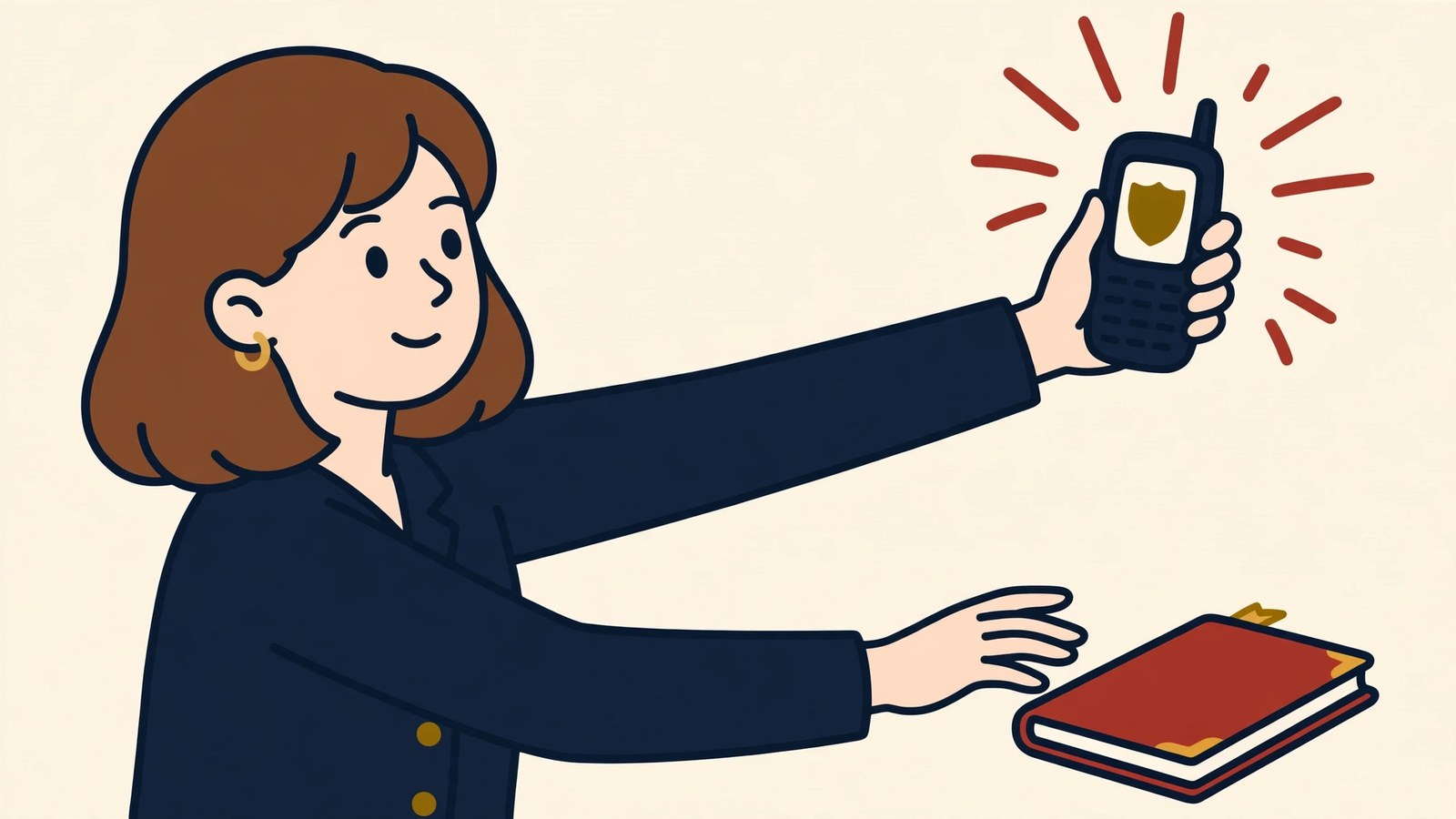
The call begins with a claim designed to make an ordinary person feel suddenly exposed: a phone registered in your name is being used to commit scams in another country.
The caller says they are with the Federal Trade Commission. They may provide a name and badge number. Then comes the threat: cooperate now, or your phone number will be deactivated.
The Federal Trade Commission issued a warning about this exact impostor scheme in October 2026. The caller is not an FTC employee, the badge is fake, and the threat to disconnect the phone is part of the script.
But the scam does not stop with one caller.
To make the story feel official, the impostor may transfer the target to a supposed police officer. The fake officer offers to take a report and asks for identification or other personal information. If the person hesitates, the scammers may even tell them what police department to search for online and which number to call.
That can feel like independent verification. According to the FTC, it is still part of the scheme. The people answering the return call are connected to the scam.
Later, the story becomes more frightening: the person is supposedly under arrest or must travel to another country unless they pay a “security deposit.” None of it is true.
Why it works
This scam builds credibility in layers.
First comes authority: the FTC, a badge number, and a serious allegation. Then comes disruption: the threat of losing a phone number that may be tied to family, work, banking, and account security. Next comes a second authority figure, the fake police officer. Finally, secrecy and the threat of arrest isolate the target from anyone who might interrupt the story.
Each new step makes the previous one feel more believable.
The target is not being asked to judge one suspicious sentence. They are being pulled into a staged process that imitates an investigation. Fear makes it harder to stop and ask the most useful question: “How can I verify this without using anything the caller gave me?”
Warning signs to watch for
End the call when someone claiming to represent the FTC or another government agency:
- Threatens to deactivate or disconnect your phone number.
- Sends a photograph of an employee ID or badge as proof.
- Transfers you to police or another agency that immediately continues the same story.
- Tells you what to search for or which number to call to “verify” the case.
- Says you are connected to a crime and must pay to avoid arrest or travel.
- Requests a security deposit, fine, bond, or other immediate payment.
- Asks for gift cards, cryptocurrency, a wire transfer, cash, or payment through a courier.
- Tells you not to discuss the call with family, friends, your bank, or local police.
The FTC says its employees will not demand money, threaten to disconnect a phone, send a photo ID to prove their identity, or order someone to keep the conversation secret.
The 60-second defense
Use one rule for every unexpected government call:
The caller does not get to control the verification.
Hang up. Do not use a number, link, search phrase, or transfer provided during the call. Do not press a button to reach another department.
If the claim involves the FTC, type FTC.gov directly into your browser. If it involves local police, find the department's official website independently and call its published non-emergency number. Tell a family member what happened before sending money or sharing identification.
Do not rely on caller ID. A displayed agency name or familiar local number is not proof of who is calling.
If information or money was already sent
There is no shame in being caught inside a carefully staged conversation. Stop contact and preserve the caller's number, voicemails, texts, payment instructions, receipts, and any images of supposed credentials.
Contact the bank, card issuer, wire service, payment app, or cryptocurrency company immediately and explain that the transaction involved fraud. Some payments cannot be reversed, but speed gives the provider the best chance to help.
If identification or account information was shared, visit IdentityTheft.gov for a personalized recovery plan. Report the scam at ReportFraud.ftc.gov. The FBI also recommends reporting government impersonation schemes to IC3.gov and contacting local law enforcement.
Talk about it tonight
Ask your family:
“If a government caller transferred you to the police, would that feel like proof? What would you do instead?”
Agree that anyone in the family may hang up, call another family member, and verify through a number found independently. No legitimate emergency becomes less legitimate because you took five minutes to check it.
Scammers want to keep the conversation moving. Families can stop the script by moving the decision outside the call.
If you receive a suspicious call or follow-up message, describe it to the free Scam Detector for help identifying the pressure tactics and deciding what to verify. Remove names, account numbers, identification numbers, and other sensitive information before submitting anything.