
Scam alert · October 14, 2026
The FBI Office on the Video Call Was Fake. Here Is the Clue That Matters.
Scammers are staging convincing video calls and using real agents' names. Learn the verification rule that works even when the person and office look official.
Read this in five minutes. Then talk about it with someone you care about.
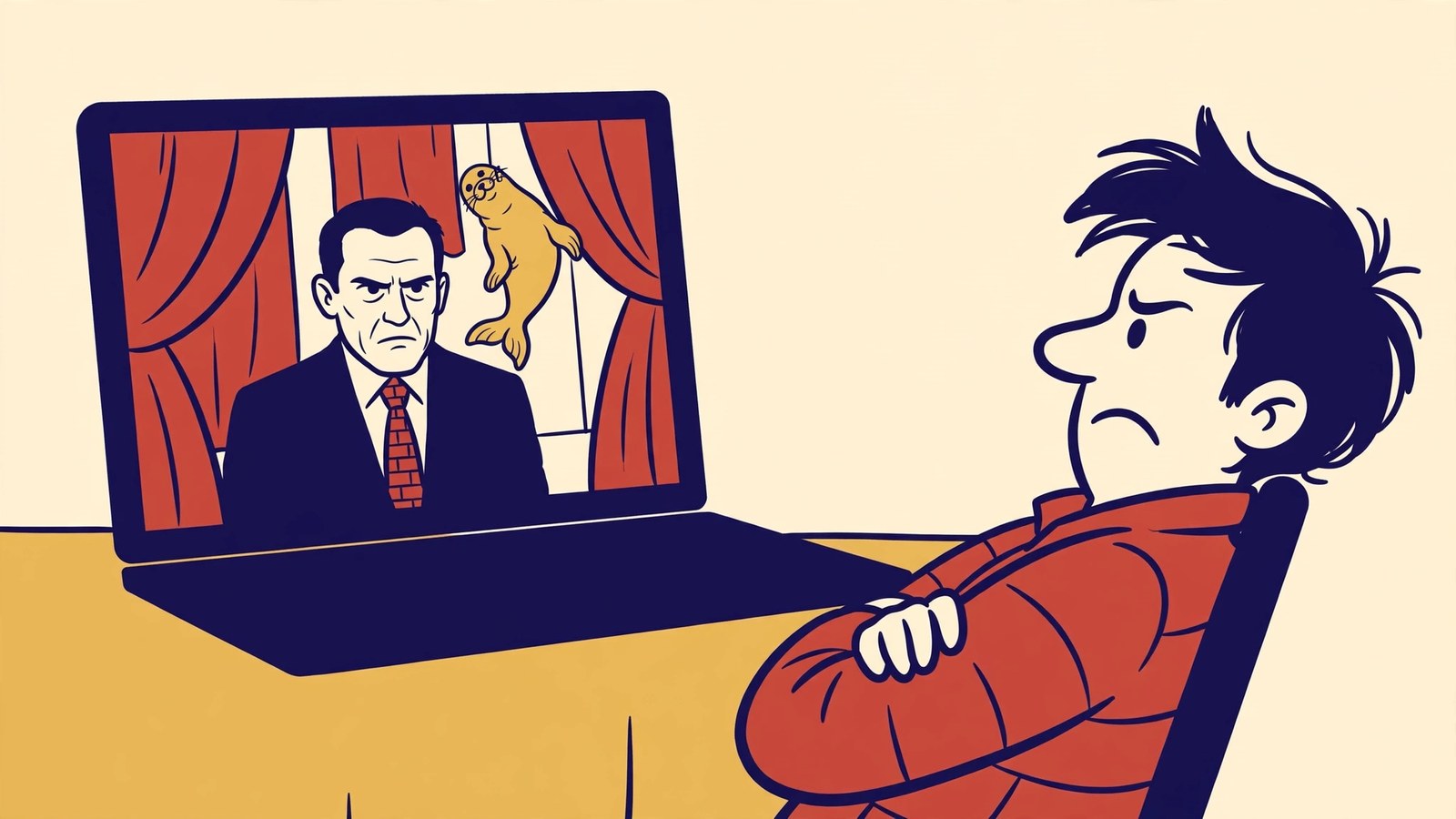
Imagine receiving a call from someone who says they are a federal agent. The number on your screen appears to belong to a real government office. The caller gives you the name of an actual agent. Then they move the conversation to video.
On your screen is a serious-looking person in a suit, seated behind a desk. An FBI seal appears in the background.
It feels like proof.
It is not.
FBI Newark recently warned about criminals impersonating FBI, DEA, and Secret Service agents. According to the FBI, scammers have spoofed real field-office phone numbers and used the names of real agents. In one reported variation, a fraudster staged a video-call background to resemble an FBI office, complete with a desk and FBI seal.
This is an important shift in how families should think about scams: the caller no longer has to look suspicious to be suspicious.
Why the usual checks can fail
Most of us were taught to look for mistakes. Bad spelling. A strange phone number. A sloppy website. A caller who cannot answer basic questions.
Those clues can still help, but criminals are getting better at removing them. A scammer may use a real employee's name, copy an official logo, spoof a trusted phone number, or create a professional-looking background. Artificial intelligence can help produce polished messages, convincing images, altered video, and realistic voices.
The Canadian Anti-Fraud Centre put the lesson plainly in its Cyber Month guidance: a message, image, video, or voice that appears real does not prove that it is real.
The better question is not, “Does this look official?”
It is, “What is this person asking me to do?”
The behavioral clues that matter
Be especially cautious when an unexpected caller claiming authority:
- says you are involved in a crime or investigation
- threatens arrest, account seizure, deportation, or another immediate consequence
- tells you not to speak with family, your bank, an attorney, or local police
- asks for money, cryptocurrency, gift cards, cash, or a wire transfer
- asks for passwords, PINs, verification codes, or remote access to a device
- insists you remain on the phone or video call while you act
- sends you to a specific website, phone number, payment location, or account
The uniform, badge, caller ID, office, or video background may be part of the performance. Pressure and secrecy reveal the purpose of it.
Federal law enforcement does not ask people to send money to settle an investigation. The FBI's warning is direct: never send money to anyone claiming to be a federal law-enforcement agent.
The 60-second defense
If an unexpected caller says they are with law enforcement, use this sequence:
- Stop the conversation. Do not argue, explain, or try to prove that you are innocent.
- Do not use contact information supplied by the caller. Do not click their link or call the number they texted you.
- Find the agency independently. Type the agency's official
.govaddress yourself and locate its published main number. - Explain that you may be the target of impersonation. Ask the agency to verify both the person's identity and whether the contact itself is legitimate.
- Call someone you trust before taking any financial action. A real official will not need to isolate you from your family.
The FBI says that if you cannot reach a local field office, contact the agency's main office. You can also reach the FBI at 1-800-CALL-FBI. If a scammer uses video, preserve evidence when it is safe to do so, such as screenshots or a recording, and submit it through the FBI's official reporting channel.
If you already shared information or money
There is no shame in being persuaded by a carefully staged operation. Move quickly instead.
Contact your bank through the number on your card or its official app. Tell the fraud department exactly what you shared, sent, or installed. Ask whether transfers can be stopped, accounts secured, cards replaced, passwords changed, or unfamiliar sessions removed.
Do not continue communicating with the caller, even if they threaten you for ending the conversation. Save messages, phone numbers, payment receipts, screenshots, names used, and the time of each contact. Report the incident to local police and the relevant national reporting service.
Talk about it tonight
Ask your family this question: “If someone on video showed us a badge and said they were from the FBI, what would we do before believing them?”
Agree on the answer now: end the incoming contact, find the official agency number independently, and tell another person before sending money or information.
Scammers want the set, costume, and urgency to make the decision for you. A family verification rule takes that power back.
If you receive a suspicious message or want help identifying the pressure tactics, use The Scam Hotline Scam Detector. Remove names, account numbers, verification codes, and other sensitive information before using any online tool.