
Scam alert · September 18, 2026
The Tractor Was Real. The Seller Wasn't.
Scammers are impersonating farm equipment businesses and collecting large wire payments for machinery that never arrives. Learn how to verify the seller first.
Read this in five minutes. Then talk about it with someone you care about.
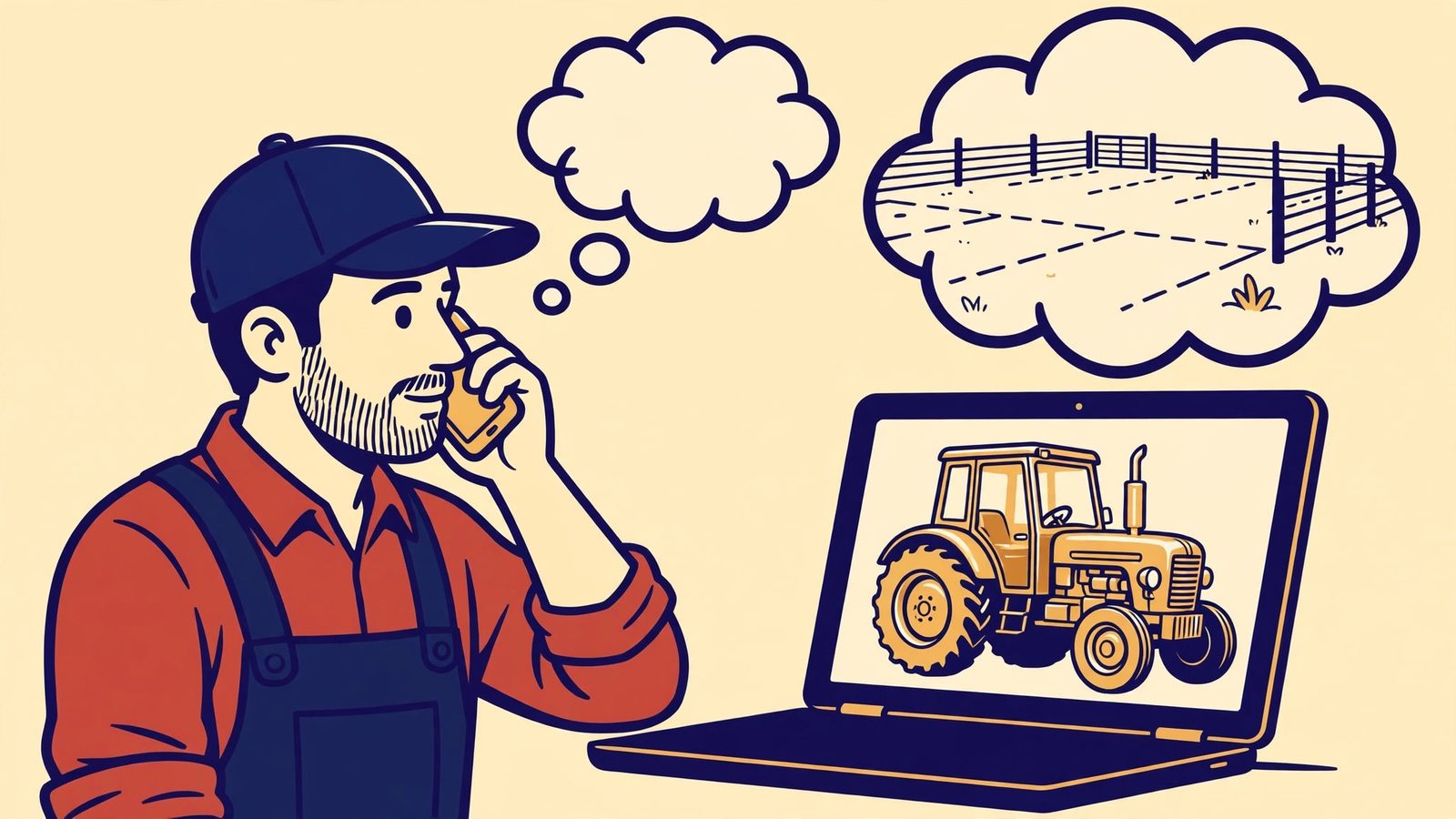
The tractor in the photograph looks real because it probably is. The company name is familiar. The invoice looks professional. The seller answers questions and schedules a delivery date.
Then the buyer sends thousands of dollars, and the equipment never arrives.
The Federal Trade Commission is warning about scammers impersonating farm equipment businesses. They advertise tractors or other machinery through social media or fake business websites, collect a deposit or full payment, and disappear. If the buyer follows up, the seller may blame a delivery problem before eventually stopping communication.
This warning matters beyond the farming community. It shows how a scammer can borrow the reputation of a real business, place a believable product inside that borrowed identity, and make a large payment feel routine.
How the scam is built
The buyer may first encounter the equipment in a social media advertisement. In other cases, the buyer searches online and finds what appears to be a company they recognize or have used before.
The listing is attractive but not necessarily absurd. The scammer may use photographs copied from a legitimate dealer, provide a purchase agreement, and send an invoice. Those details make the transaction feel organized and reduce the buyer's urge to question it.
The seller then asks for a deposit or full payment, often by wire transfer. Once the money is sent, there is no tractor, no delivery, and sometimes no practical way to reverse the transaction.
Why smart buyers get caught
Large equipment purchases often involve distance. A buyer may be accustomed to searching across several states for the right machine. That makes an online conversation, remote invoice, and scheduled delivery seem normal.
Search results can also create false confidence. The first result is not always the official business. Paid advertisements can appear above ordinary results, and a scammer can use a familiar company name with different contact information.
Most importantly, the purchase is attached to a real need. A farmer may need equipment before planting, harvest, or a repair deadline. Urgency does not have to be invented when the buyer already has a clock running.
Scammers do not need someone to ignore every warning sign. They need the deal to feel legitimate long enough for one irreversible payment.
Warning signs worth slowing down for
Be cautious when the seller insists on a wire transfer, cryptocurrency, gift card, or payment app, especially for a large purchase. These payment methods can be difficult to reverse after the money is received.
Look carefully at the website address and email domain. A polished site can still be an imitation. A slightly altered company name, an extra word in the web address, or a salesperson using a free email account deserves a second check.
Watch for pressure to pay before you can inspect the equipment, confirm its serial number, or speak with the business through independently verified contact information.
A purchase agreement is not proof by itself. Scammers can create convincing paperwork just as easily as they can copy photographs.
The 60-second defense
Use this rule before sending a large payment: Find the seller through a second path that the seller did not give you.
Do not rely only on the phone number, email address, link, or invoice from the advertisement. Search for the business separately. Scroll past sponsored results. Find its established website, public business listing, or manufacturer-authorized dealer page, and call the number listed there.
Ask the business to confirm the salesperson, equipment, serial number, price, and payment instructions. If possible, inspect the equipment in person or hire a trusted local professional to do it. Search the company name with words such as “scam” and “complaint,” but remember that the absence of complaints does not prove a seller is legitimate.
For a large transaction, also ask your bank what protections or verification steps are available before sending funds.
If the payment has already been sent
Contact the bank or wire-transfer provider immediately and ask whether the transfer can be recalled or frozen. Speed matters, but recovery is never guaranteed.
Save the advertisement, website address, invoice, payment instructions, emails, text messages, phone numbers, and transaction records. Report the fraud at ReportFraud.ftc.gov and to the appropriate law-enforcement agency. Tell the real business being impersonated so it can warn other customers.
Most of all, do not let embarrassment delay the call. The scam was designed to look like an ordinary business transaction.
Talk about it tonight
Ask your family or business partners: “Before one of us sends a large payment, what independent step will we use to verify the person receiving it?”
Write down the answer. A second phone call can feel unnecessary before a payment and essential five minutes afterward.
If an advertisement, seller, or payment request feels suspicious, describe the situation in The Scam Hotline Scam Detector. It is free and can help you identify the pressure tactics and decide what to verify next.
Scammers want silence. Families talk. Talk to yours today.