
Scam alert · October 13, 2026
The Caller Said Your Bank Needed Your Help. That Was the Trap.
Fake bank investigators use fear, authority, and verification codes to steal money. Learn the family rule that stops the scam before money moves.
Read this in five minutes. Then talk about it with someone you care about.
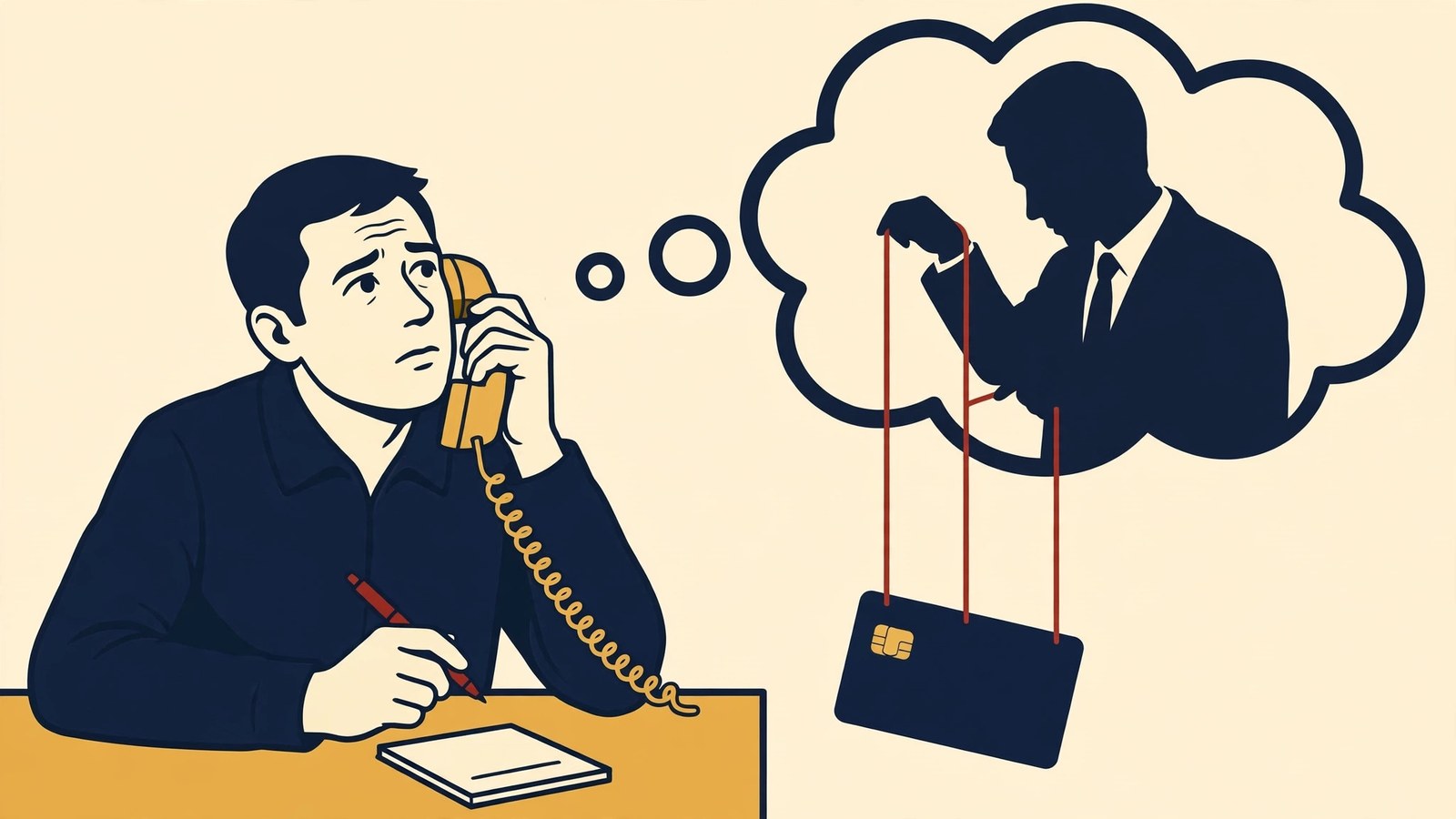
The call may begin with words that instantly tighten your chest: “We found suspicious activity on your account.”
Then comes the reassuring part. The caller says they are from your bank’s fraud department, and they are already working on the problem. They may know your name, your bank, or part of your card number. They may even appear to be calling from a familiar number.
But the “investigator” does not simply ask you to confirm a purchase. They ask you to help catch the criminal.
That is the trap.
Kingston Police in Ontario recently warned that fraudsters posing as bank investigators, fraud employees, or security staff are asking people for online banking credentials and verification codes. In other cases, victims were persuaded to surrender bank cards, buy gift cards or gold, mail cash, send e-transfers, or deposit money into a Bitcoin ATM.
The details change. The rule does not: A real fraud department protects your account. It does not recruit you to move money, share a code, or surrender a bank card.
Why this scam works
This scam combines three powerful pressures.
First, it creates fear. Someone may be stealing your money right now.
Second, it borrows authority. The caller sounds calm, professional, and familiar with banking procedures.
Third, it gives you a role. You are not merely a potential victim; you are helping with an “investigation.” That can make unusual instructions feel important instead of suspicious.
The caller may know real information about you. That is not proof. Personal details can come from data breaches, phishing attempts, public records, or information bought online. The Canadian Anti-Fraud Centre also warns that scammers may recite the first four to six digits of a card. Those digits identify the card issuer and are shared across many cards.
Even caller ID is not proof. Phone numbers can be spoofed.
The verification-code warning
A one-time verification code is not a receipt, a case number, or a way for a bank employee to “cancel” a transaction. It is a key that may let someone enter your account.
The Federal Trade Commission explains that a password and verification code work like two locks. A criminal who already has your password may still need the code sent to your phone. When you read it aloud, you may be opening the second lock for them.
Treat every unexpected request for a verification code as a signal to end the conversation.
The 60-second defense
Use this rule whenever someone unexpectedly says your money is in danger:
- Hang up. You do not need the caller’s permission.
- Use a trusted contact route. Open your bank’s official app or call the number printed on the back of your card or a recent statement.
- Use a different phone if possible, or wait at least 10 minutes. The Canadian Anti-Fraud Centre recommends this precaution before making the outgoing call.
- Tell the real bank what happened. Say, “I received an unexpected fraud call and want to verify my account independently.”
- Do not move money, share a code, install software, or hand over a card. A legitimate investigation does not require any of these actions.
Do not search for a customer-service number and automatically call the first result. The FTC warns that scammers can place paid search advertisements that display fake contact numbers. Use the bank’s app, statement, or card instead.
If you already followed an instruction
Act quickly, without embarrassment. These scams are designed to make reasonable people react under pressure.
Call your bank through a trusted number and ask for the fraud department. Explain exactly what you shared or transferred. Ask them to secure the account, lock or replace affected cards, review recent transactions, revoke unfamiliar sessions, and help you change compromised passwords or PINs.
If someone collected a card from your home, mention that specifically. Report the incident to local police and your national fraud-reporting service: the Canadian Anti-Fraud Centre in Canada or ReportFraud.ftc.gov in the United States.
Talk about it tonight
Ask your family: “If someone from the bank said our money was at risk, what trusted number would we use to call the bank back?”
Then find that number together. Save it in the phones of anyone who may need it. Agree that nobody in the family will move money, share a verification code, or keep a “fraud investigation” secret without first calling another family member.
Scammers want the conversation to stay between you and them. Families get harder to fool when they interrupt that isolation.
If a message or situation feels suspicious, use The Scam Hotline Scam Detector to slow the moment down and identify possible red flags. Do not paste passwords, account numbers, verification codes, or other sensitive information into any online tool.