
Scam alert · September 22, 2026
The Storm Passed. Now the Scammer Is at the Door.
After storms and natural disasters, fake contractors and government impersonators target families under pressure. Make this verification plan before repairs begin.
Read this in five minutes. Then talk about it with someone you care about.
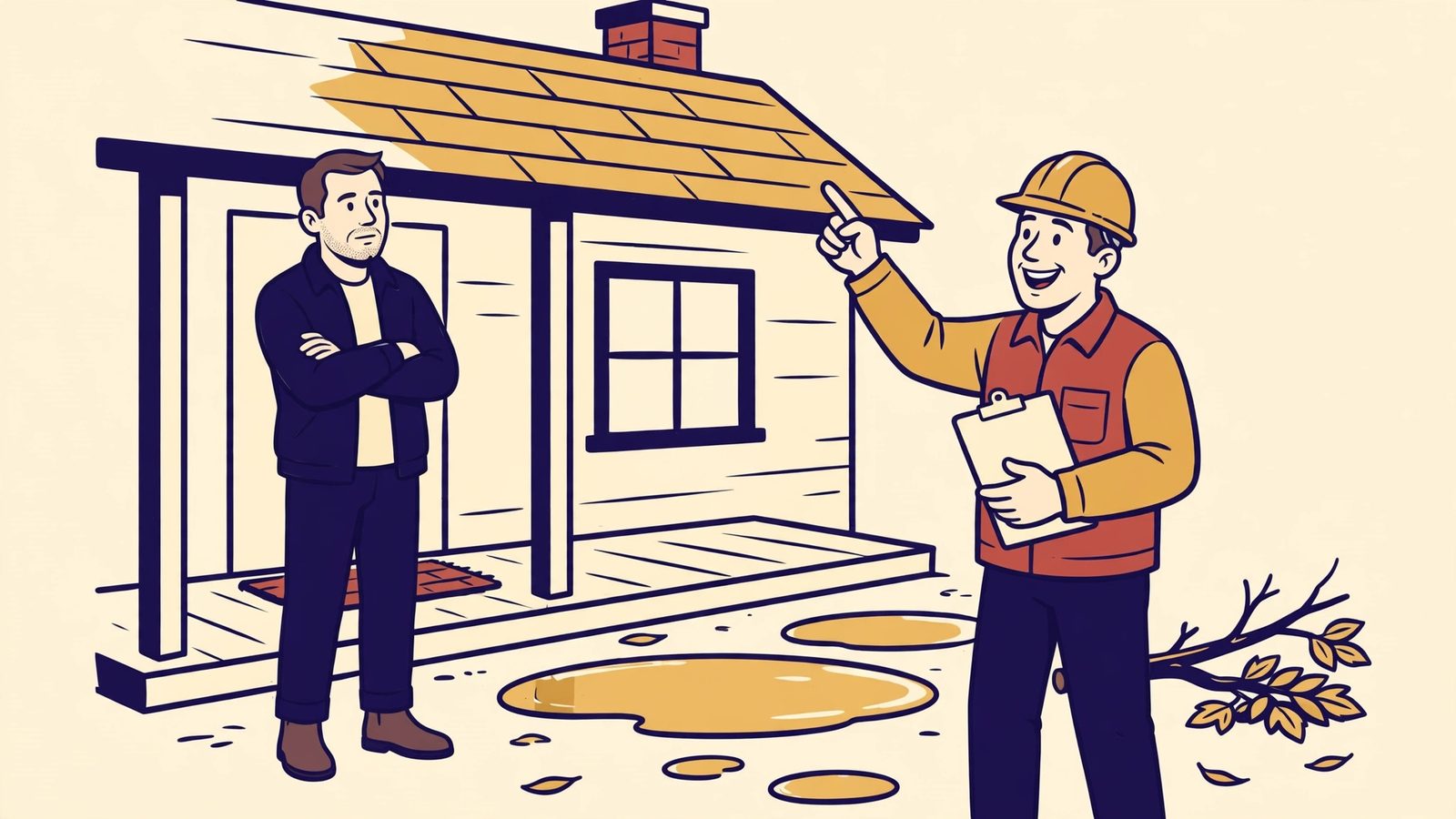
The power is out. A tree is across the driveway. Water is coming through the ceiling, and every legitimate contractor in town seems to have a waiting list.
Then someone knocks and says they can start today.
That offer may be genuine. It may also be the beginning of a disaster-recovery scam.
September is National Preparedness Month, and the Federal Trade Commission is reminding families that scammers often appear after hurricanes, floods, tornadoes, wildfires, and other emergencies. They may pose as contractors, utility workers, government representatives, charities, or sellers of hard-to-find supplies.
The storm creates the damage. The pressure to fix it creates the opening.
How the scam arrives
A person may show up at the door offering roof repairs, tree removal, water cleanup, or an immediate inspection. They may claim they are already working nearby or that your home has a dangerous problem that cannot wait.
The offer usually moves quickly toward money. The contractor may want a large deposit or full payment in advance. They may prefer cash, a wire transfer, cryptocurrency, a payment app, or another method that is difficult to reverse. They may avoid giving you a written contract, proof of insurance, or a license number.
Other scammers pretend to represent FEMA or another government agency. They offer disaster assistance, an inspection, or help completing an application, but ask for a fee or financial information. The FTC says FEMA does not charge application fees, and FEMA employees do not ask survivors to pay for inspections or disaster assistance.
Why families get caught
After an emergency, waiting feels dangerous. A damaged roof can become a ruined ceiling. Standing water can become mold. A family living without power or a safe place to sleep is not shopping under normal conditions.
Scammers exploit that reality. They do not need to manufacture urgency because the emergency already created it.
They also use helpfulness as camouflage. A person with a clipboard, work truck, safety vest, or official-looking badge can feel like relief arriving at the door. But clothing, paperwork, and logos are easy to copy.
The goal is not to distrust everyone who offers help. It is to verify before desperation turns an unfamiliar person into a trusted one.
Warning signs
Pause if someone appears unexpectedly and pressures you to sign immediately, claims a special price is available only today, or asks you to sign a blank or incomplete contract.
Be cautious if the contractor refuses to provide identification, a license number, proof of insurance, references, or a written description of the work. Watch for anyone who wants the entire price up front or asks you to sign over an insurance check.
Payment instructions matter. The FTC warns against contractors who insist on cash, gift cards, wire transfers, cryptocurrency, or payment apps. Those methods can leave families with fewer options when the work never begins.
For government assistance, remember one bright-line rule: Anyone demanding payment to obtain FEMA disaster assistance is not FEMA.
The 60-second defense
Use a three-part rule before hiring anyone after an emergency: Verify the person, verify the company, and verify the payment plan.
Ask for identification, a contractor license, and proof of insurance. Confirm the license through your state or county government rather than through a link the contractor provides. Search the company name with words such as “scam,” “review,” and “complaint.” Get more than one written estimate when conditions allow.
Require a written contract that identifies the company, scope of work, materials, price, payment schedule, and estimated dates. Do not leave blank spaces. Arrange payments in stages tied to completed work, and avoid making the final payment until the work is finished and you are satisfied.
If someone claims to represent FEMA, contact FEMA directly using FEMA.gov or 1-800-621-FEMA. A badge alone is not verification.
Prepare before the weather turns
The easiest time to check a roofer, tree service, restoration company, or insurance policy is before your neighborhood is under pressure.
Create a short household list with your insurer's claim number, local emergency contacts, two trusted contractors, your utility company's official number, and the web addresses for FEMA and your state consumer-protection office. Store a printed copy with your emergency supplies and a protected digital copy your family can reach.
That list gives you a trusted path when search results, advertisements, and strangers are all competing for your attention.
Talk about it tonight
Ask your family: “If someone comes to the door after a storm and says we must pay today, who will we call before signing anything?”
Choose that person now. It might be a relative outside the affected area who is calm, connected, and able to verify information while you handle the immediate damage.
If an offer, contractor, or assistance message feels suspicious, describe it in The Scam Hotline Scam Detector. It is free and can help you identify pressure tactics and decide what to verify before money changes hands.
Scammers want silence. Families talk. Talk to yours today.