
Scam alert · September 25, 2026
Your “Bank” Is Sending a Driver for Your Card. Stop.
A bank-imposter scam used convincing calls and a rideshare driver to collect victims' cards. Learn the simple verification rule every family should know.
Read this in five minutes. Then talk about it with someone you care about.
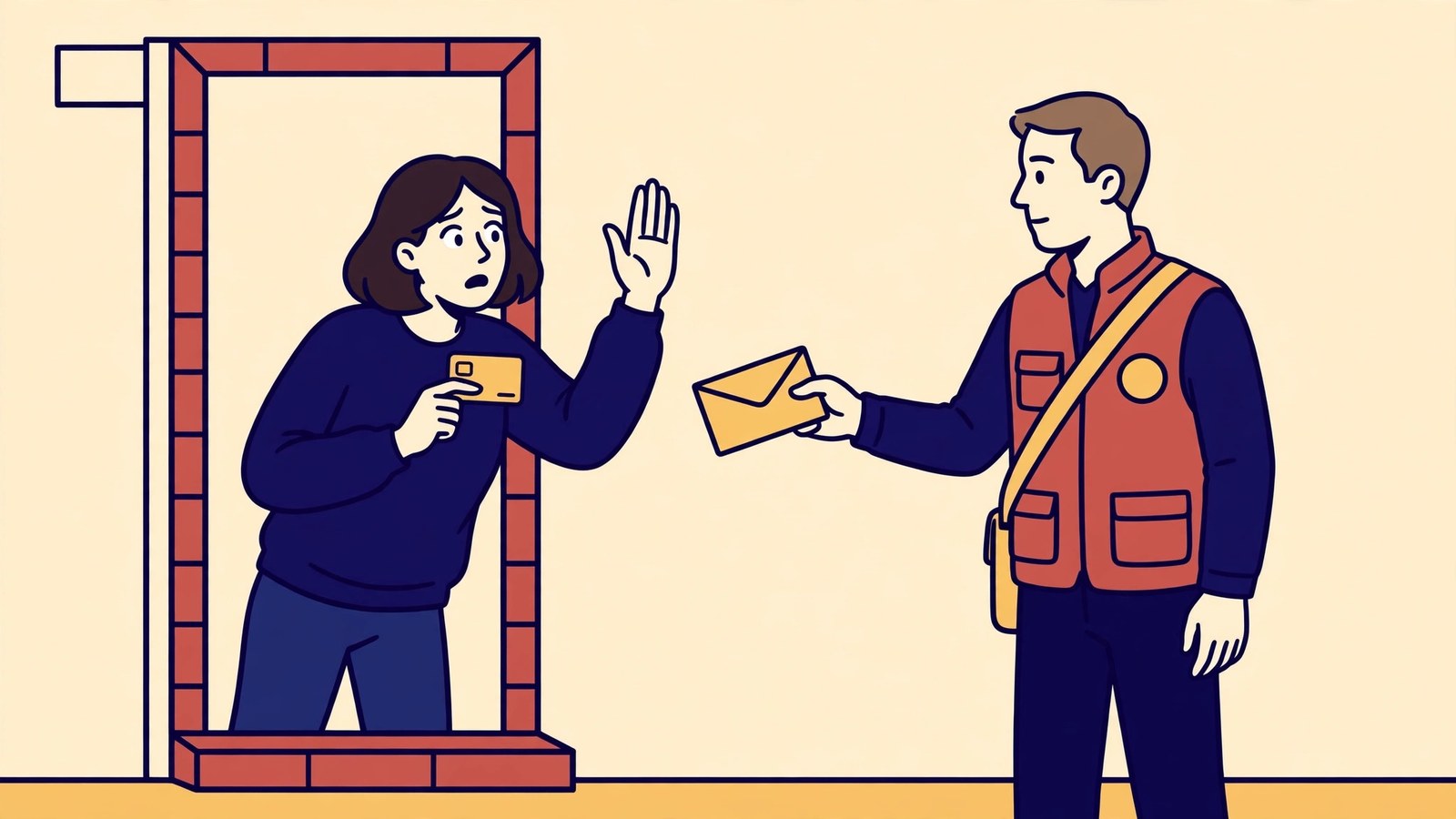
The caller says there is fraud on your bank account. The name of your bank may even appear on caller ID.
Then comes the reassuring part: you do not need to drive anywhere. The “bank” will send someone to your home to collect the compromised card.
It sounds like unusually attentive customer service. It is actually the moment to hang up.
On September 21, federal prosecutors in San Diego announced the sentencing of a man who posed as a bank employee and helped trick older adults into surrendering their bank cards. He received a 57-month prison sentence and was ordered to pay more than $270,000 to victims.
According to the Justice Department, the callers falsely claimed they were investigating fraud on victims' accounts. In one case, a rideshare driver was sent to the home of an 80-year-old woman to pick up her cards. The cards were then used for more than $43,000 in withdrawals and purchases, including $22,000 at Apple stores.
One victim told the court that the call appeared to come from U.S. Bank. That detail matters because many people still treat caller ID as proof.
It is not proof.
Why this scam feels legitimate
The call begins with a real fear: someone may be stealing from your account. That creates urgency before the victim has time to check the story.
The caller may know the victim's name, bank, or other personal information. The bank's name may appear on the screen because caller ID can be manipulated. Then the arrival of a real driver adds a physical layer of credibility. A person is standing outside, so the entire story suddenly feels organized and official.
But the driver may have no idea a crime is occurring. The rideshare is simply being used as a delivery system between the victim and the criminal.
This is why intelligence alone is not enough. The scam is built to make a sensible person feel that acting quickly is the responsible thing to do.
The warning signs
Treat these requests as danger signals:
- An unexpected caller says there is urgent fraud on your account.
- The caller asks for your PIN, password, security code, or one-time verification code.
- Someone wants you to surrender a debit or credit card.
- A driver, courier, or “bank representative” is being sent to your home.
- The caller tells you to stay on the line, keep the matter private, or avoid contacting your local branch.
- You are pressured to act before you can call a family member or verify the situation independently.
The caller may sound calm and professional. The caller ID may look right. The story may include accurate information. None of those details replaces independent verification.
The 60-second defense
Make this the family rule:
We never hand a bank card, PIN, password, or verification code to someone who contacted us. We hang up and call the bank ourselves.
Use the number printed on the back of the card, the bank's official app, or a website you already know. Do not call a number supplied by the unexpected caller or text message.
If a driver is already outside, do not hand over the card. There is no need to argue with the caller or solve the mystery at the door. End the call, go inside, and contact the bank independently. If you feel threatened or someone refuses to leave, call 911.
Banks may contact customers about suspicious activity. The protection comes from ending the incoming conversation and starting a new one through a trusted channel.
If the card was already handed over
Call the bank's fraud department immediately. Ask it to lock or cancel the card, secure the account, review recent activity, and explain the process for disputing unauthorized transactions. If the banking app offers a card-lock feature, use it while making the call.
Write down what happened while the details are fresh: phone numbers, caller names, the time of the call, what was requested, driver information, receipts, messages, and any transactions you recognize as fraudulent. Do not delete texts or call records.
Report cyber-enabled fraud to the FBI's Internet Crime Complaint Center at IC3.gov. Anyone age 60 or older who has experienced financial fraud can also call the National Elder Fraud Hotline at 1-833-FRAUD-11 (1-833-372-8311). Contact local law enforcement if money or property was taken.
And make the first family response support, not blame. Shame makes people hide what happened. A calm response helps everyone act faster.
Talk about it tonight
Ask your family: “What would you do if the bank called and said a driver was coming to collect your card?”
Then practice the answer together: hang up, keep the card, and call the bank using a number you trust.
If a bank call, text, or account warning feels suspicious, describe it in The Scam Hotline Scam Detector. Do not include card numbers, PINs, passwords, or other sensitive information. The free tool can help you spot the pressure tactics and plan the next verification step.
Scammers want silence. Families talk. Talk to yours today.