
Scam alert · October 27, 2026
The Election Message May Be Real. The Link Still Needs Checking.
Election-season scams can imitate campaigns, PACs, merchandise stores, and voter-registration sites. Learn how to verify before donating, buying, or sharing information.
Read this in five minutes. Then talk about it with someone you care about.
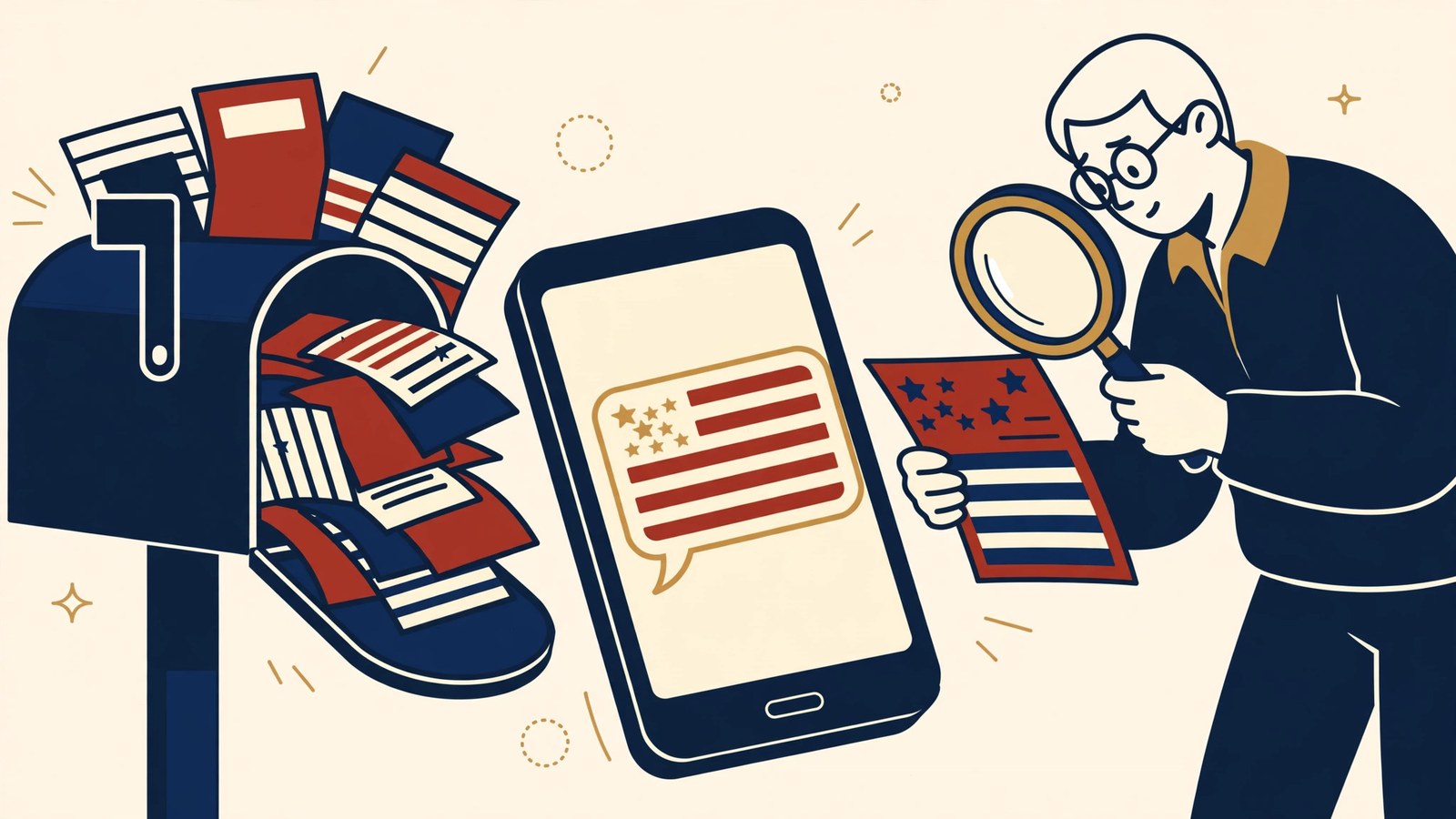
In the final weeks before an election, phones fill with donation requests, surveys, campaign messages, voter reminders, and merchandise offers.
Many are legitimate. Scammers benefit from that crowded environment.
The FBI warned on October 15 that criminals could exploit the 2026 U.S. midterm election to solicit fraudulent campaign contributions, sell merchandise that never arrives, steal personal information through fake voter-registration pages, and promote supposed “campaign investment pools.” Artificial intelligence can make the voices, images, and written messages look more convincing.
This is not about a political party or candidate. It is about criminals borrowing the urgency and familiarity of an election to make people click before they verify.
Four versions families may see
The campaign-donation message: A text, call, email, or social post claims to represent a candidate, party, or political action committee. The name and logo may be real, but the payment link sends money somewhere else.
The campaign investment: The promoter says contributions are being placed into a pool that will pay investors after a candidate wins. A political contribution is not an investment and does not grow or return a profit.
The merchandise store: A social advertisement sells shirts, hats, flags, coins, or other campaign-themed products. The payment is collected, but the merchandise never arrives.
The voter-registration warning: A message says you are not registered, your registration has been canceled, or you must verify personal information immediately. The link leads to a fake page designed to collect identity information.
Each version uses a different story, but the pressure is similar: act now because the election is close.
Why this works
Election messages are emotional by design. People may feel loyalty, anger, hope, fear, or a responsibility to participate. Those feelings are not the problem. The scammer's goal is to turn them into speed.
The message may use a real slogan, public photograph, campaign color, candidate video, or current controversy. Caller ID can be manipulated. A social-media ad can look professional. An AI-generated voice or video may appear to come from a public figure.
None of those details verifies the destination of the link or the identity of the person collecting money.
Even registration deserves careful review. The FBI notes that a PAC can appear in official records while spending heavily on fundraising, consulting, compliance, or administration. Registration is an important check, but it does not automatically prove that a donation will be used as a donor expects.
The leave-the-message rule
Before donating, buying merchandise, or checking voter registration:
- Do not use the message's link. Leave the text, email, ad, or direct message.
- Find the official destination independently. Type the campaign, party, election office, or government website into your browser yourself.
- Check political committees through the Federal Election Commission. Review the committee's registration and available financial filings at FEC.gov.
- Check voter registration only through an official state election website or Vote.gov. You do not need to provide information to an unsolicited sender to confirm your status.
- Research unfamiliar stores. Search the seller's name with words such as “review,” “complaint,” or “scam,” and examine its refund, shipping, and contact information.
A useful family rule is: an urgent civic message may remind us to act, but it does not choose the website where we act.
Warning signs
Pause when a political message:
- promises a financial return from a campaign contribution
- says voter registration will disappear unless you use its link immediately
- asks for a Social Security number, bank login, or other unnecessary sensitive information
- accepts payment only through cryptocurrency, gift cards, wire transfer, or a payment app
- uses a web address that is slightly different from the campaign or government site
- pressures you not to research the committee, seller, or request
- claims a purchase or donation must remain secret
- arrives from a familiar person whose account may have been compromised
If you already clicked or paid
If you entered a password, change it immediately anywhere it was reused and enable multi-factor authentication. If you provided financial information, contact your financial institution or card issuer. Ask whether the transaction can be stopped or disputed and monitor the account for unauthorized activity.
Save the message, website address, account name, phone number, receipts, and screenshots. Report suspected election-related financial fraud to the FBI Internet Crime Complaint Center at IC3.gov. Report deceptive donation or merchandise activity to the FTC at ReportFraud.ftc.gov and the platform where the message or advertisement appeared.
For voter-registration questions, contact your state or local election office through information you find independently on an official government website.
Talk about it tonight
Ask your family: “If we received a message saying our voter registration had a problem, where would we go without using its link?”
Then find your official state election website together and save it. That small preparation removes the scammer's ability to choose the path during an urgent moment.
If a donation, merchandise, or registration message feels unusual, use The Scam Hotline Scam Detector to examine its pressure tactics. Remove names, political affiliations, voter information, account details, and other sensitive information before using any online tool.